Call or Text: +1 (208) 425-2990
Email: Sales@DroneSprayPro.com

Spray Drift: Causes and Solutions with Drones
Spray drift occurs when pesticides, herbicides, or fertilizers miss their target during application, often due to wind, droplet size, or improper equipment settings. This can waste resources, damage nearby ecosystems, and even lead to legal issues. Drones offer a precise way to address this problem by controlling altitude, droplet size, and spray patterns, reducing the chances of drift.
Key Takeaways:
- Main Causes of Spray Drift: Wind, small droplet size, high drone altitude, dry weather, incorrect nozzles, and fast drone speeds.
- How Drones Help: Low-altitude flights, GPS-guided paths, advanced nozzles, and real-time weather adjustments. High-performance models like the DJI Agras T50 are specifically designed to manage these variables.
- Best Practices: Calibrate equipment, monitor weather, balance payloads, and maintain drones regularly.
Drones are reshaping how farms handle chemical applications, offering better control and reducing off-target spread. Proper planning and maintenance ensure safe, efficient operations.
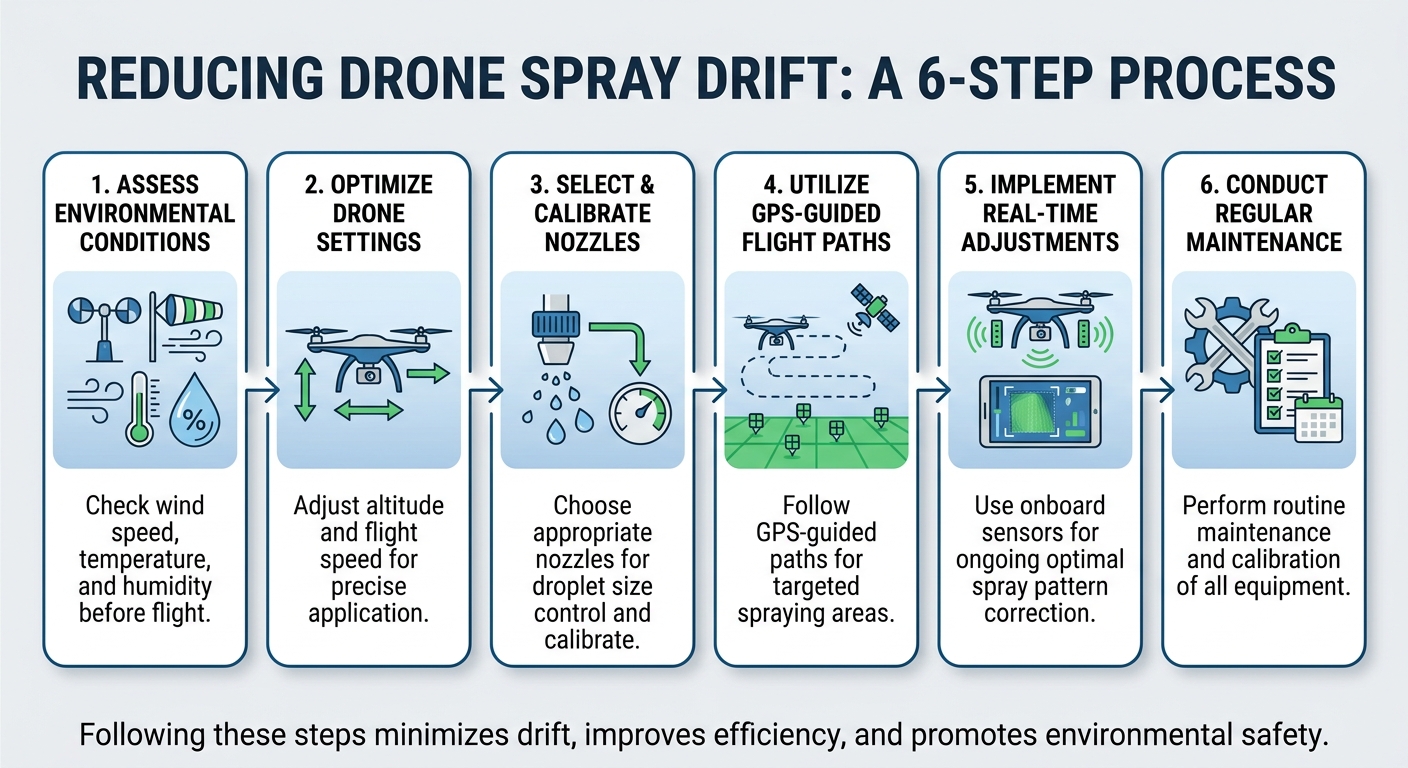
Reducing Spray Drift with Drones: Key Processes
Main Causes of Spray Drift in Drone Spraying
Spray drift is a common challenge in drone spraying, and understanding its causes is key to minimizing its impact. Several factors contribute to this issue, ranging from environmental conditions to equipment settings.
1. Wind Speed and Direction
Wind is one of the most significant contributors to spray drift. High wind speeds can carry droplets far away from their intended target, while unpredictable gusts or changes in wind direction can make it difficult to control where the spray lands.
2. Droplet Size
The size of the spray droplets plays a big role. Smaller droplets are more likely to be carried away by wind or evaporate before reaching the target. Adjusting nozzle settings to produce slightly larger droplets can help reduce drift.
3. Altitude of the Drone
Flying the drone too high increases the distance droplets must travel, giving wind more time to disperse them. Maintaining an appropriate altitude with a precision aircraft like the DJI Agras T40 ensures the spray reaches its target more effectively.
4. Temperature and Humidity
Hot and dry conditions can cause droplets to evaporate before they land, especially if they are very fine. This is known as vapor drift and is more likely to occur in low-humidity environments.
5. Incorrect Nozzle Selection
Using the wrong type of nozzle can lead to uneven spray patterns or produce droplets that are too fine. Choosing the right nozzle for the task and calibrating it properly is essential for controlling drift.
6. Drone Speed
Flying the drone too quickly can create air turbulence, which disrupts the spray pattern and increases the chances of drift. Slower speeds typically allow for more precise application.
sbb-itb-3b7eef7
How Agricultural Drones Help Reduce Spray Drift
Agricultural drones are transforming how farmers manage their crops, especially when it comes to applying pesticides and fertilizers. One of their standout benefits is their ability to minimize spray drift - a common challenge in traditional spraying methods.
Spray drift happens when chemicals intended for crops end up being carried away by wind, affecting unintended areas or neighboring fields. This not only wastes resources but can also harm surrounding ecosystems. Drones tackle this problem by offering precise application and better control.
Here’s how they help:
- Targeted Spraying: Drones can be programmed to follow specific flight paths, ensuring chemicals are applied only where needed. This reduces the risk of overspray and keeps treatments confined to designated areas.
- Low-Altitude Flight: Flying closer to the crops means less distance for the spray to travel, decreasing the likelihood of chemicals being carried off by wind. This process is further aided by the downward airflow known as prop wash, which helps push the spray into the crop canopy.
- Advanced Nozzles: Many agricultural sprayer drones are equipped with nozzles designed to produce fine, uniform droplets. This improves coverage and reduces the chance of drift.
- Real-Time Adjustments: Some drones include sensors that monitor wind speed and direction, allowing them to adjust spray patterns on the fly for maximum accuracy.
Best Practices for Drift Reduction with High-Capacity Drones
Operating high-capacity drones efficiently requires careful attention to factors that can cause drift. Drift can affect precision, safety, and overall performance, so minimizing it is crucial. Here are some practical tips to help reduce drift when using these drones:
- Calibrate Sensors Regularly: Properly calibrated sensors, like gyroscopes and accelerometers, are essential for maintaining stability. Regular calibration ensures the drone's onboard systems can accurately interpret its position and movements.
- Monitor Weather Conditions: Wind is one of the biggest contributors to drift. Before flying, check for wind speeds and other weather conditions. Avoid flying in high winds or turbulent environments to maintain better control.
- Optimize Payload Distribution with a precision spraying drone: Unevenly distributed payloads can destabilize the drone, increasing the risk of drift. Ensure that the weight is evenly balanced and securely attached before takeoff.
- Use GPS and Advanced Navigation Systems: Many high-capacity drones come equipped with GPS and other navigation aids. These systems can help correct drift in real-time, especially during autonomous flights.
- Perform Routine Maintenance: Regularly inspect motors, propellers, and other mechanical components. Worn or damaged parts can lead to uneven thrust, which may cause drift.
- Practice Manual Control: Even with advanced automation, a skilled operator can make a big difference. Practicing manual control techniques can help correct drift in situations where automation may struggle.
Conclusion: Better Drift Control with Drones
Agricultural drones are changing the way farms manage spray applications by cutting down spray drift in a big way. Thanks to precise RTK GPS technology, dynamic rate control, and rotor downwash - which can shrink the spray stream by roughly 20% [1] - drones apply chemicals with accuracy and reduce unwanted off-target spread. Flying at an ideal height, usually between 8 and 12 feet, and using specialized nozzles that create medium to coarse droplets further improves drift management.
Following best practices - like careful pre-flight planning, making real-time adjustments during application, and selecting the right nozzles - not only boosts efficiency but also helps protect the environment. Working with experts such as Drone Spray Pro (https://dronespraypro.com) provides farmers with valuable resources, including FAA licensing guidance, targeted training, and ongoing maintenance, ensuring safe and effective drone use.
FAQs
What wind speed is too high for drone spraying?
The best wind speed for drone spraying falls between 3–8 mph. Spraying in winds stronger than 8–10 mph is risky, as it can lead to chemical drift and potential contamination of surrounding areas. While drones are capable of operating in winds up to 20–25 mph, their spray accuracy drops sharply when wind speeds reach around 75% of the drone's maximum wind-handling capacity. Drone Spray Pro offers advanced tools to help ensure safe and precise spraying under these challenging conditions.
What droplet size should I use to reduce drift?
To minimize spray drift, aim for medium to coarse droplet sizes, ideally ranging from 250 to 400 microns. Steer clear of smaller droplets under 150 microns, as they are much more likely to be carried away by the wind. When working with drift-sensitive chemicals, consider using air-induction nozzles, which produce larger droplets that are less affected by wind. Use coarser droplets when drift control is critical, and reserve finer droplets for situations where better canopy penetration is necessary.
How can I prevent vapor drift in hot, dry weather?
Managing vapor and spray drift during hot, dry weather requires careful attention to timing and droplet control. Here are some practical steps:
- Spray Timing: Aim to spray in the early morning, late evening, or even at night. Avoid spraying when temperatures exceed 77°F, as higher heat increases evaporation and drift.
- Nozzle Selection: Opt for air-induction or medium-to-coarse nozzles. These produce larger droplets, which are less likely to evaporate quickly.
- Drift-Reducing Additives: Consider using drift-reducing adjuvants to improve droplet stability. Just make sure to test for compatibility with your spray mixture beforehand.
- Flight Altitude: Maintain a low spraying altitude - around 2 to 3 meters. This minimizes the time droplets spend in the air, reducing their exposure to drying conditions.
By combining these strategies, you can significantly cut down on drift and improve application efficiency.
